History Stuff
Battle of Gaugamela: How Alexander the Great Defeated Persia

A History Stuff documentary

Battle of Gaugamela: How Alexander the Great Defeated Persia

Two armies met on a flat plain east of the Tigris. One king commanded the largest empire the world had seen; the other was twenty-five and had never lost a pitched battle.

16 min8 chapters331 – 323 BC1 battle, mapped

The brief

One afternoon decided who would rule the known world.

In 331 BC, Alexander of Macedon faced Darius III on ground the Persian king had levelled for his scythed chariots and cavalry. Outnumbered and far from home, Alexander rested his men, studied the field and refused a night attack. The film follows both commanders, their armies and the roads that fed them, then the slow oblique march that stretched the Persian line. It shows how one afternoon changed Asia and shaped the Hellenistic world.

Who the story follows

Alexander the Great

Alexander the Great

Young Macedonian king, twenty-five and unbeaten, who marched far from home to challenge the Persian Empire.

Darius III

Darius III

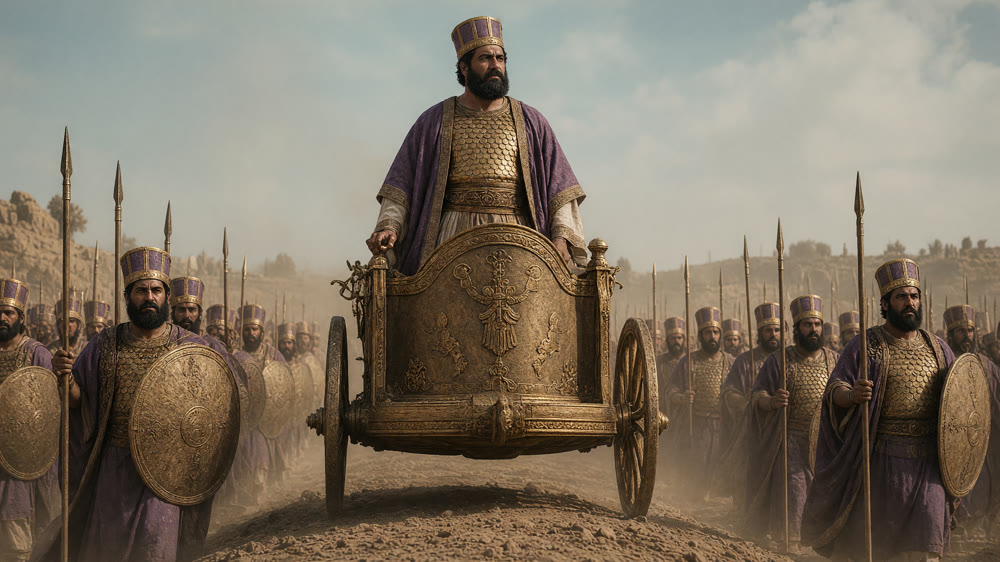
King of Kings, ruler of the largest empire the world had yet seen, who chose the ground and the weapons for this fight.

Battle of Gaugamela: How Alexander the Great Defeated Persia: the documentary on YouTubePlay on YouTube16:08

Opens on YouTube, where you can like, comment and subscribe.

8 chapters

The story, chapter by chapter

Each one opens the film at that chapter on YouTube.

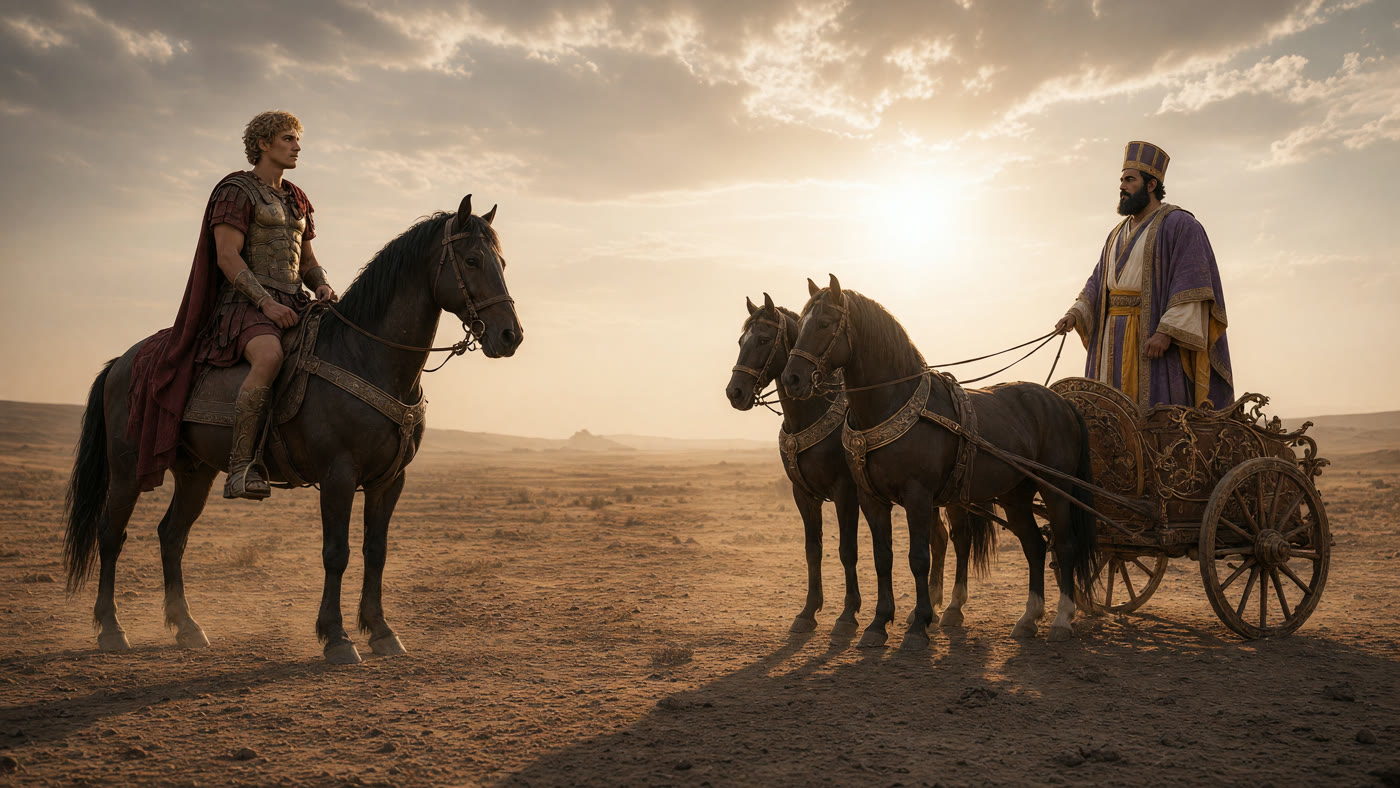
Alexander the Great, youthful, clean-shaven, with short dark curls and a lean build, and Darius III, mature with a prominent nose, fullI

Chapter 1At 0:51

The Plain at the Edge of an Empire

In autumn 331 BCE two armies face each other on a wide plain east of the Tigris. Darius has twice been beaten by Alexander and now picks open ground. Alexander, far from home, has no reinforcements coming.

Could discipline and timing beat sheer weight on a field built for the larger army?

Watch this chapter · 1:47
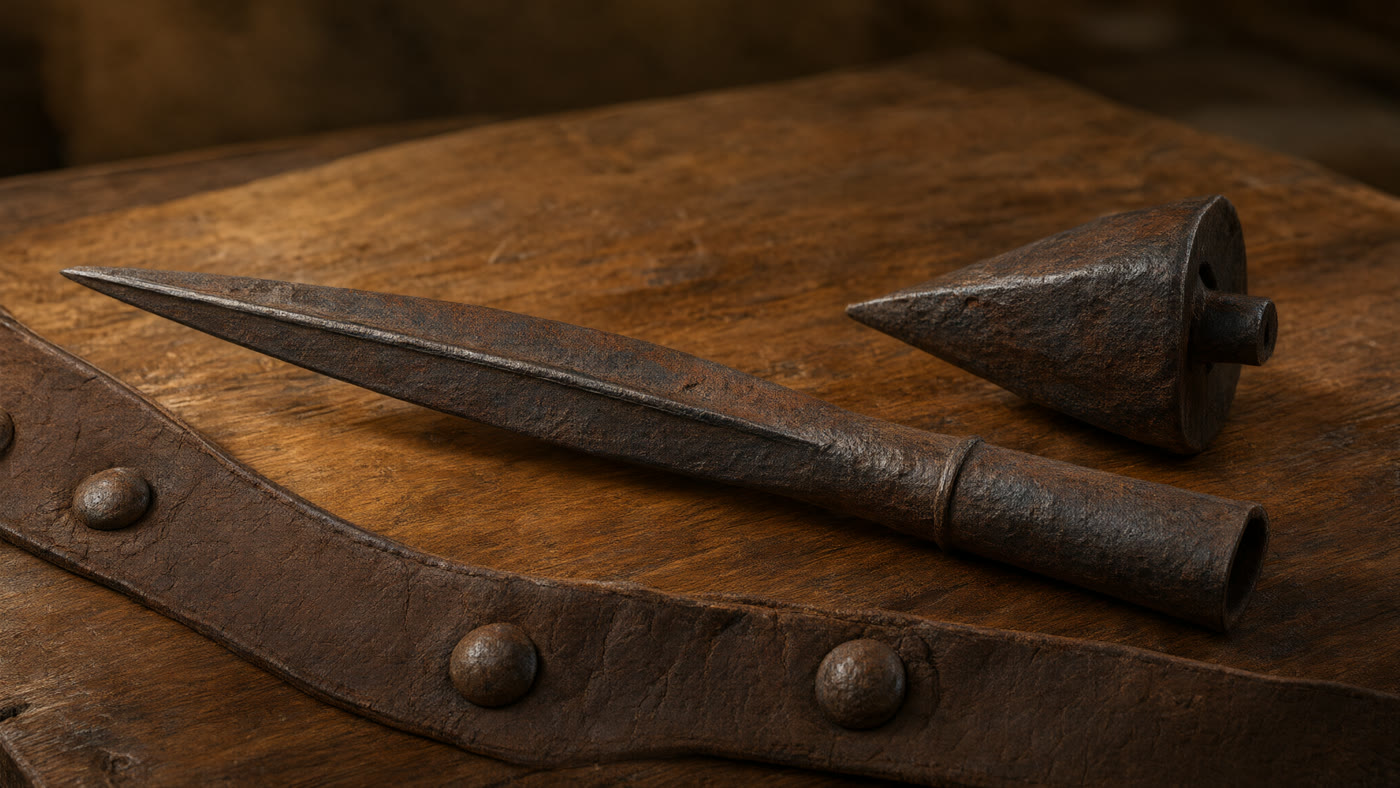
Close detail of a Macedonian sarissa tip and counterweight spike lying on a wooden table with a leather strap and iron rivets, 4th centuryII

Chapter 2At 2:49

Iron, Horses, and the Machinery of Empire

Each army arrived with very different tools. Alexander trusted the sarissa pike and the Companion cavalry wedge, while Darius brought elephants, horsemen from across his empire and chariots with blades on their wheels.

Each weapon suggested a different kind of fight, and the plain was ready for one of them.

Watch this chapter · 1:33
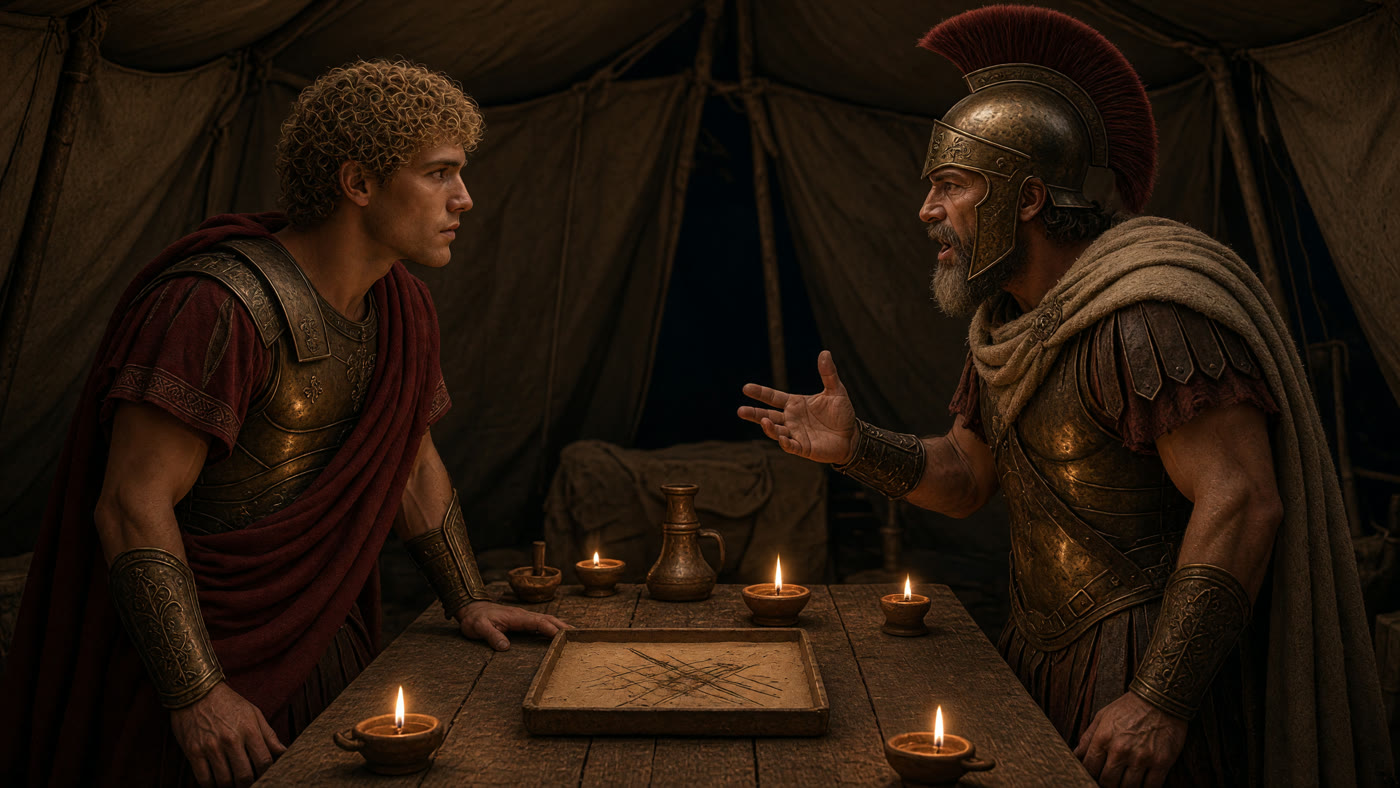
Night council in a Macedonian command tent, 331 BCE: Alexander the Great, youthful, clean-shaven, short dark curls, lean build, leaningIII

Chapter 3At 4:31

The Ground and the Craft

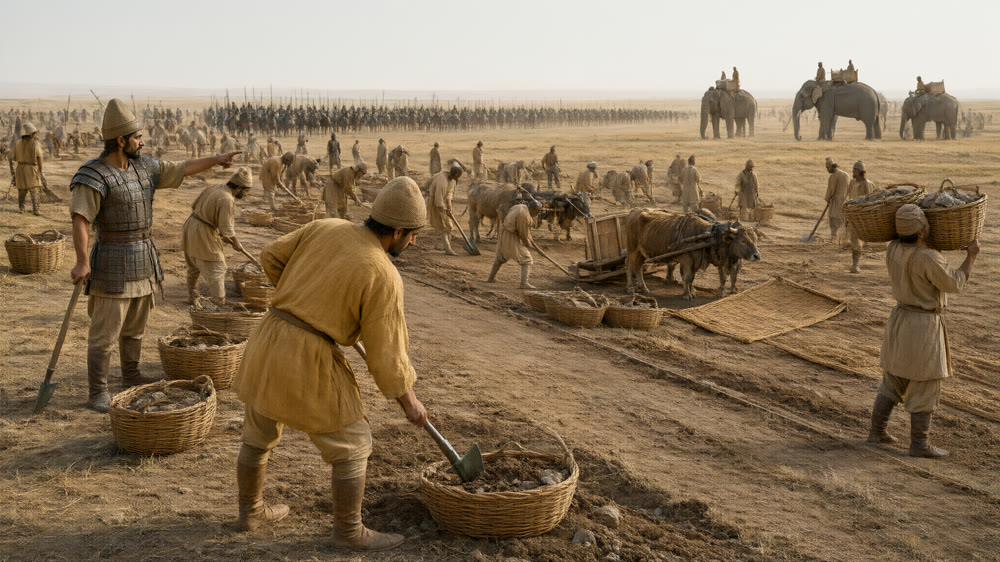
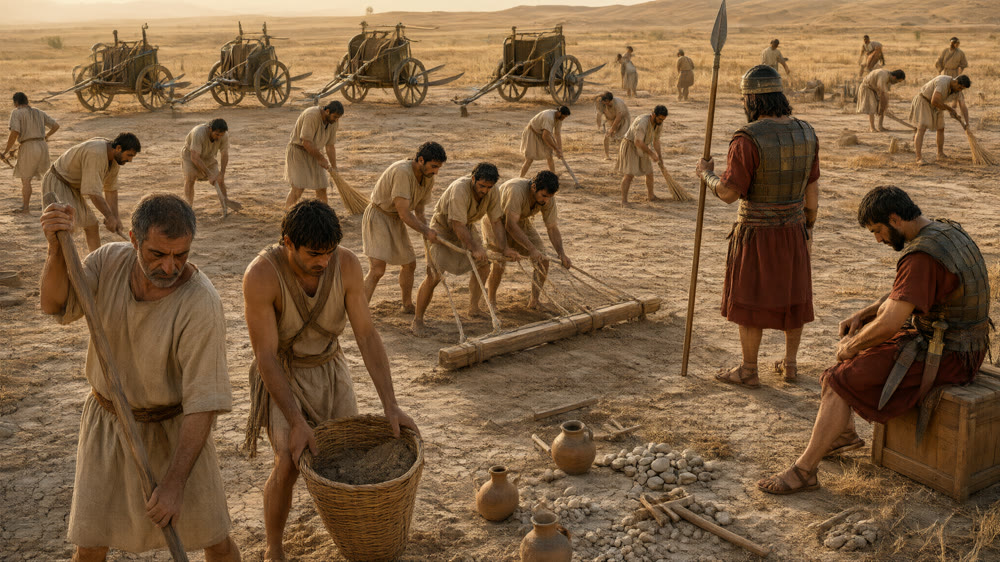
Darius had stretches of the plain levelled so his chariots could run true. Alexander rested his troops, fortified a camp and rode out to study the field. Parmenion urged a night attack, and Alexander refused.

Nothing was left to improvisation, and the first oblique march was about to begin.

Watch this chapter · 1:36
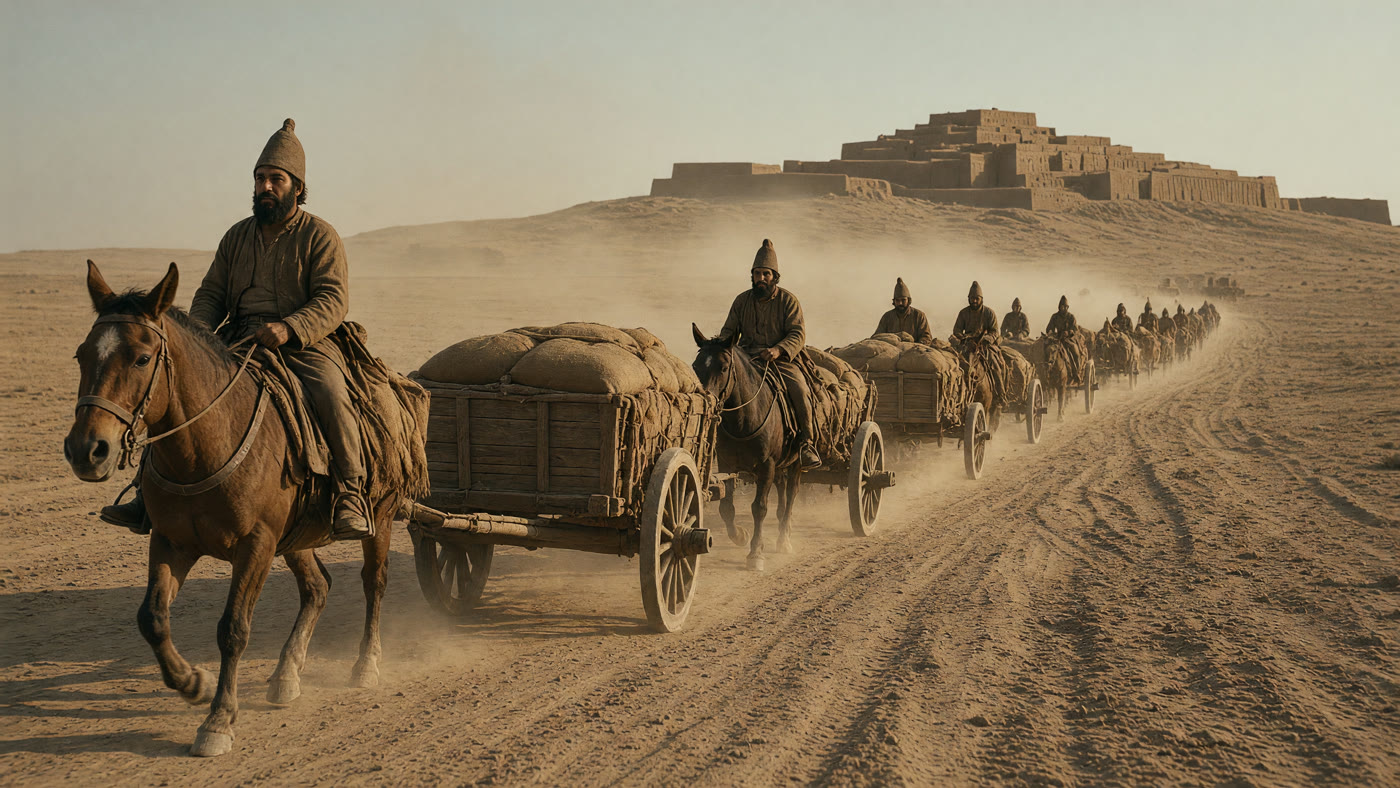
Wide view of an Achaemenid imperial road in the 4th century BCE winding across a dry Mesopotamian plain, mounted couriers in felt caps andIV

Chapter 4At 6:19

Roads of Empire, Fields of Choice

Gaugamela sat on the edge of the Assyrian heartland, where the Royal Road carried couriers, grain and armies. Darius could draw supplies and reinforcements from across his empire, while Alexander had to keep his men fed.

The road had brought them together, and the plain would decide between them.

Watch this chapter · 1:33
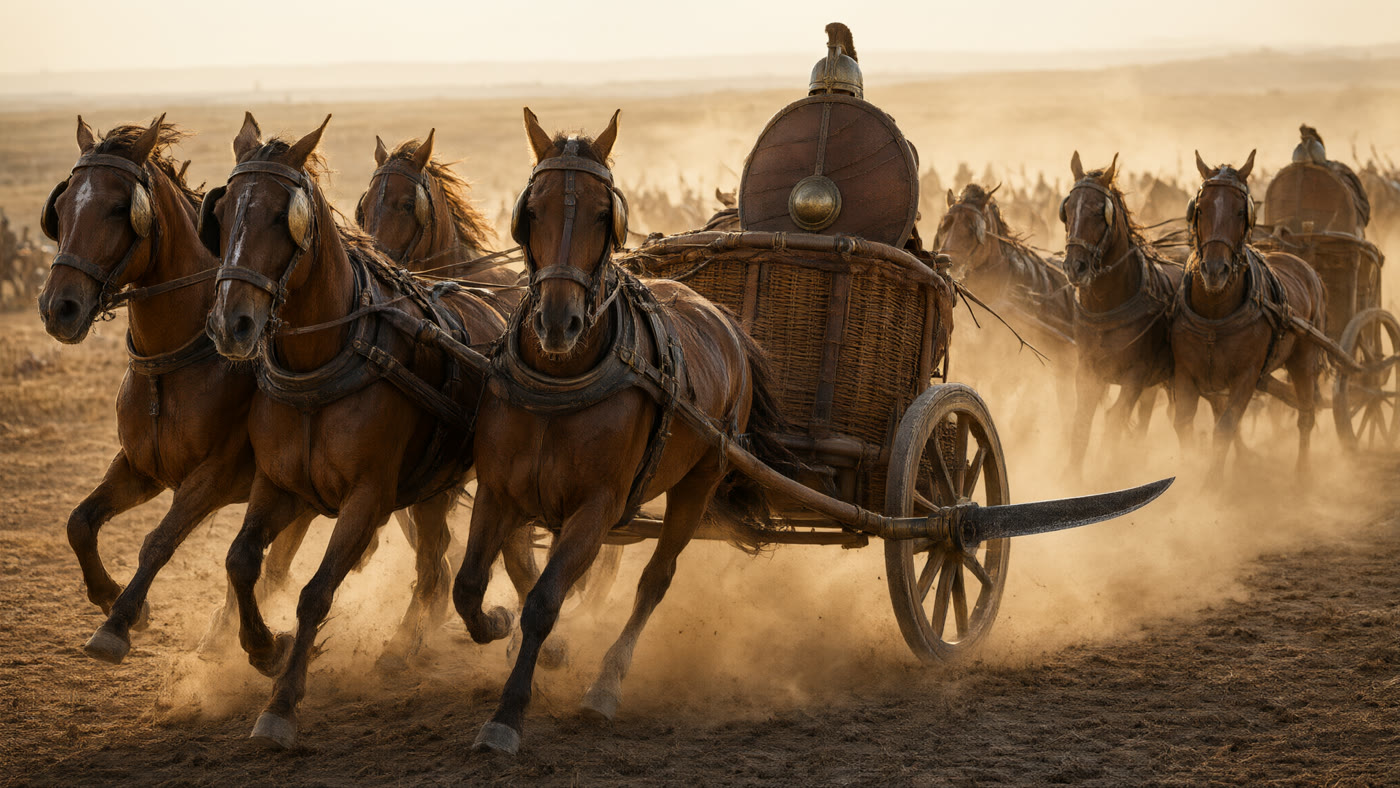
Scythed chariots charging across a levelled plain, 331 BCE: four-horse teams with armored fronts, long iron blades projecting from axleV

Chapter 5At 8:16

The Oblique March and the First Clash

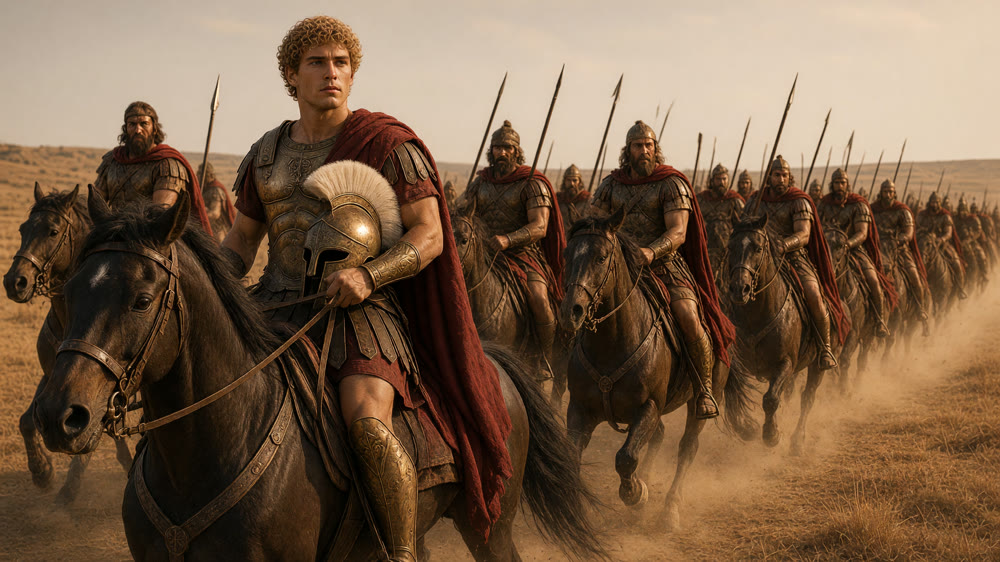
At dawn Alexander led his army forward at an angle, drifting right to pull the Persian left off the ground Darius had prepared. Cavalry clashed on the flank, and then the scythed chariots thundered across the plain.

The Persian line was stretching, and a gap was starting to open near the king.

Watch this chapter · 2:40
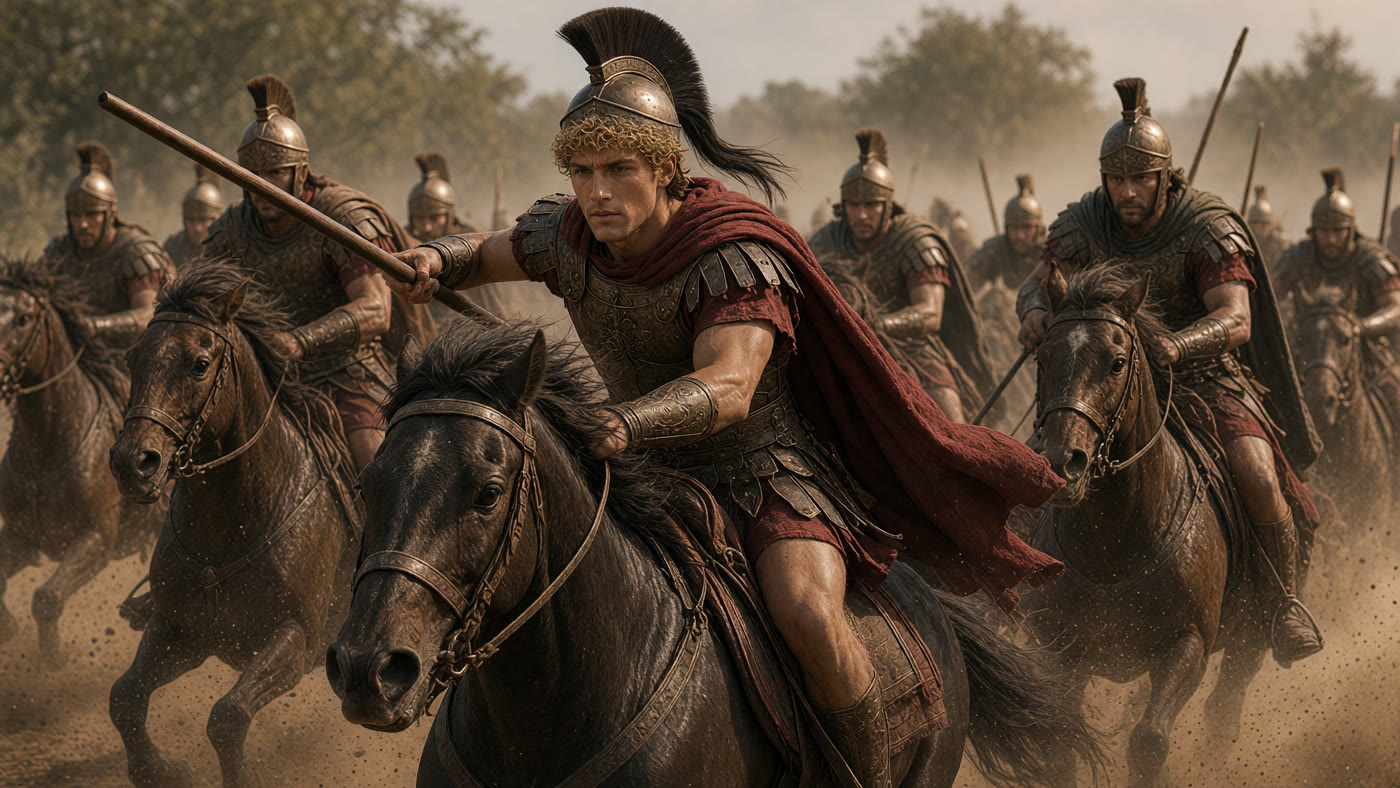
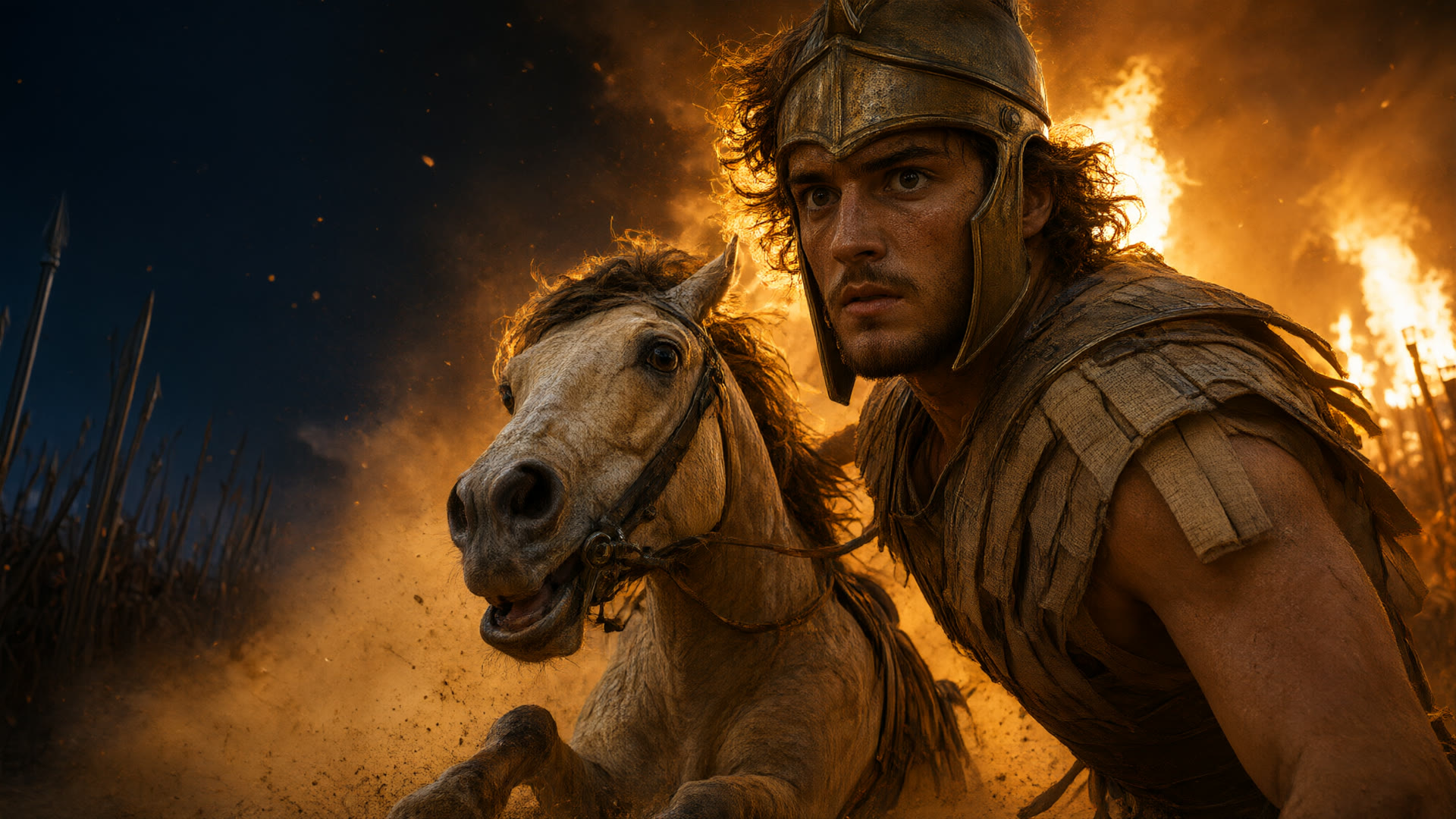
Alexander the Great, youthful, clean-shaven, short dark curls, lean build, wearing a bronze cuirass and crested helmet pushed back, leadingVI

Chapter 6At 10:59

The Gap and the Flight

The Persian horsemen had been drawn toward the flank, thinning the ranks around Darius. Alexander saw the opening and drove the Companion cavalry toward the king, while Parmenion's wing was in trouble behind him.

Alexander had to choose between the chase and his struggling wing.

Watch this chapter · 1:19
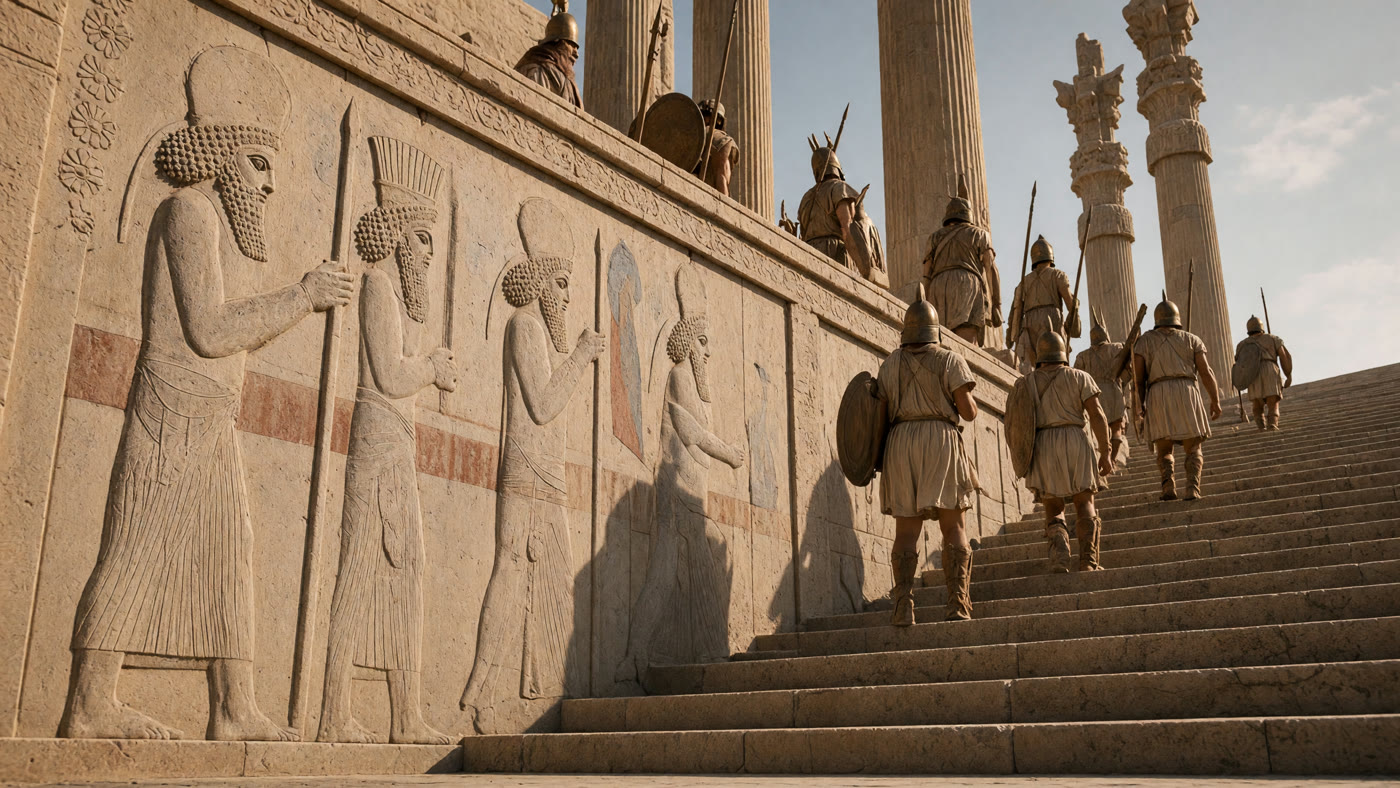
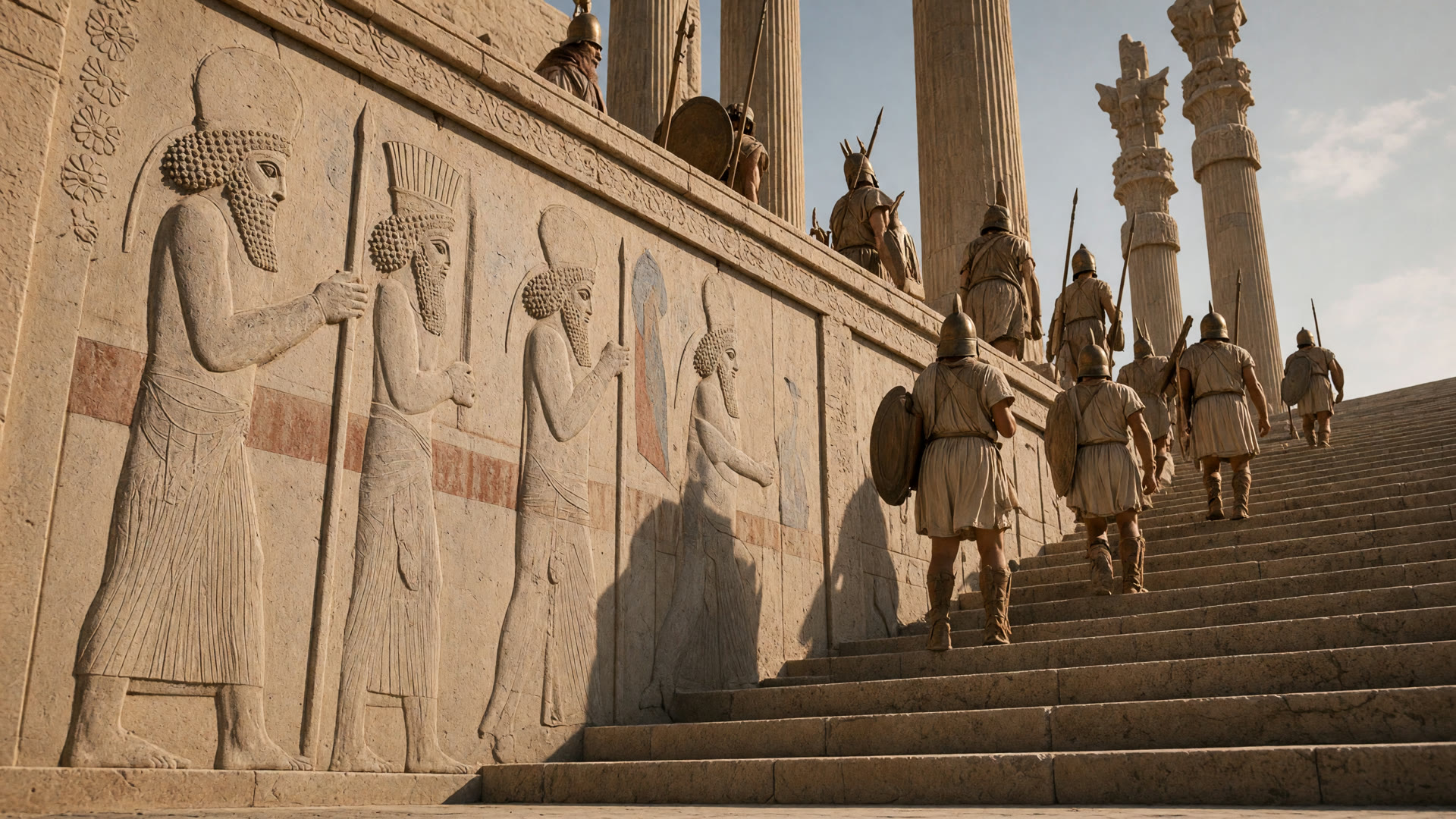
The grand terrace of Persepolis in 330 BCE, with the Apadana staircase reliefs of tribute bearers and tall fluted columns, MacedonianVII

Chapter 7At 12:30

The Empire Without a King

Darius escaped the field and fled east, hoping to gather new forces. Babylon opened its gates, Susa followed, and then Persepolis, where the royal treasuries lay waiting.

What was left of an empire when its people stopped believing the king could protect them?

Watch this chapter · 1:30
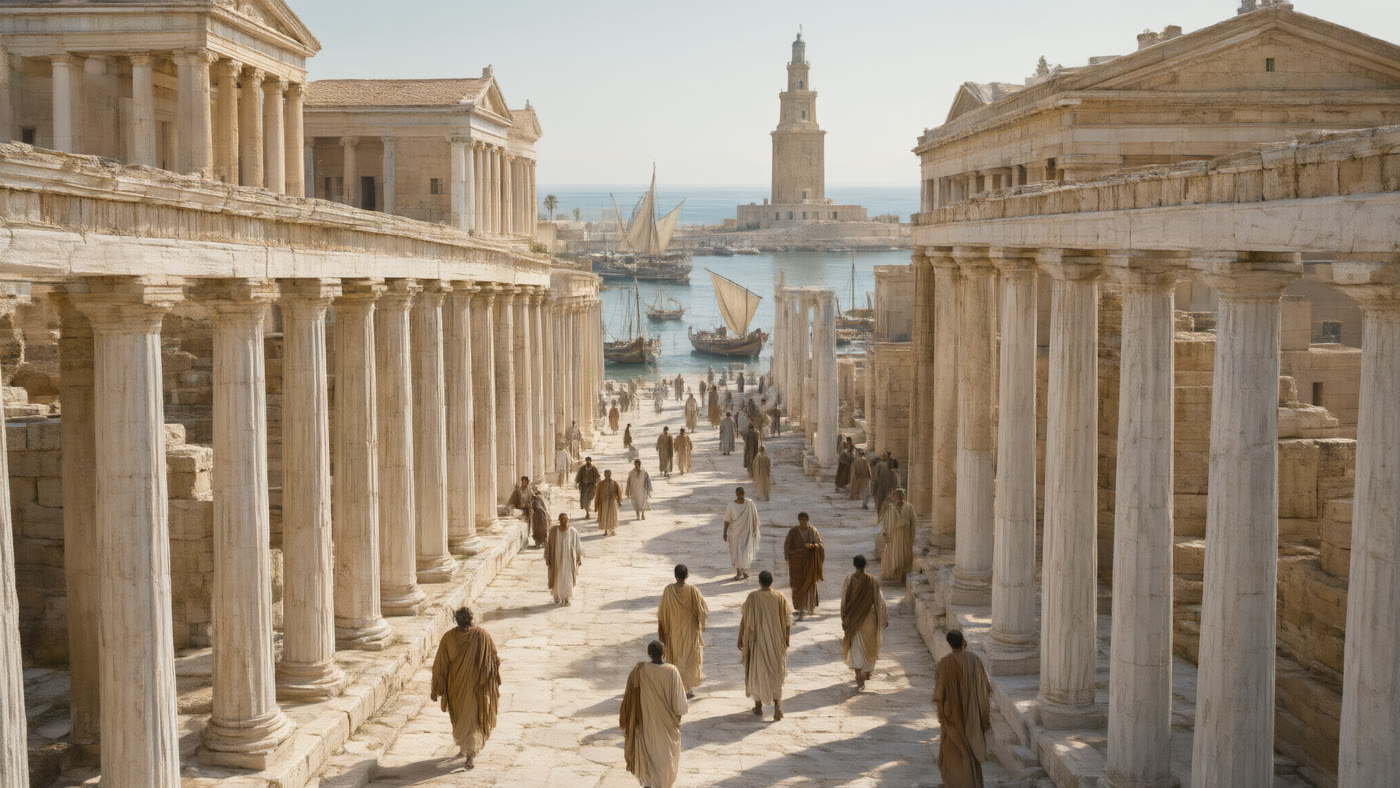
The Hellenistic city of Alexandria, Egypt, third century BCE, a broad colonnaded street of limestone and marble with Greek-style templesVIII

Chapter 8At 14:24

What One Afternoon Set in Motion

Alexander carried his army farther east than any Greek army had marched, as far as the Indus. There his weary soldiers refused to go on. His conquests were left to his generals, and a new world took shape.

From the Nile to Bactria, a blended world was about to rise.

Watch this chapter · 1:37
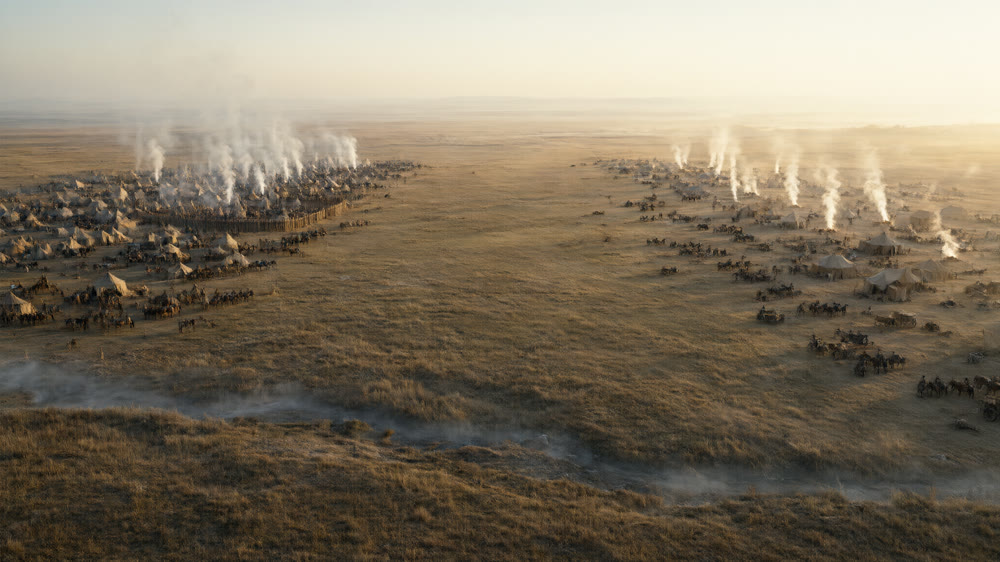
Wide aerial-style view of the open Mesopotamian plain east of the Tigris at dawn in autumn 331 BCE, flat dry grassland stretching to a pale
Wide view of Persian soldiers and laborers clearing and leveling a broad stretch of open plain, 331 BCE, hand tools, baskets of stones and
Persian laborers and soldiers leveling a broad stretch of dry plain in northern Mesopotamia, 331 BCE, with wooden tools, baskets and
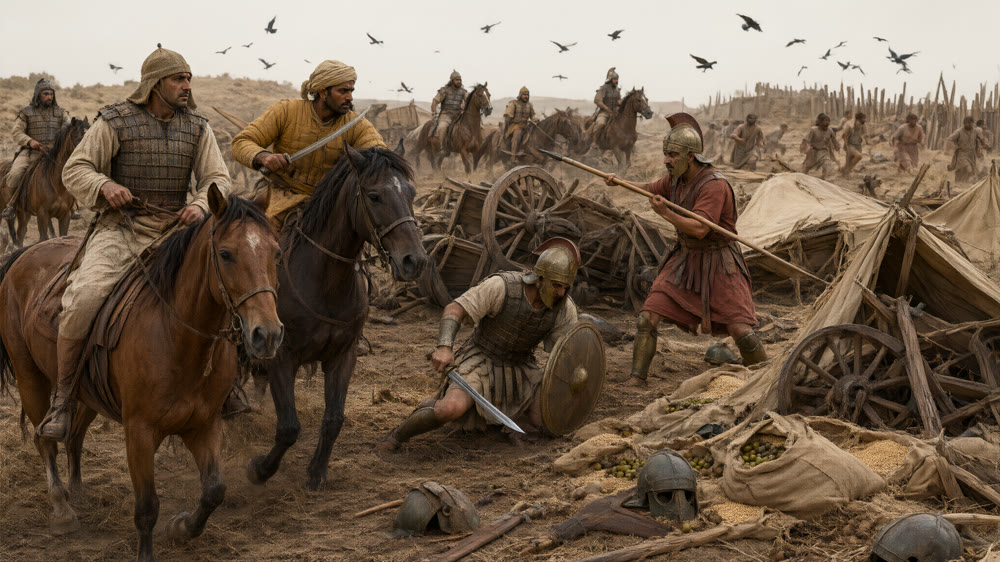
Persian and Indian cavalry riding through a scattered Macedonian baggage camp, overturned carts, tents, and sacks, a few Macedonian guards

Gaugamela, 331 BC

Darius watched his line stretch across the plain as a dark seam began to open in it.

Watch the full documentary on YouTube and see how one afternoon east of the Tigris changed the ancient world.